Chinchillas don’t need water baths.
In fact, this is actually bad for them as their fur is so dense that without outside help, it could never completely dry naturally!
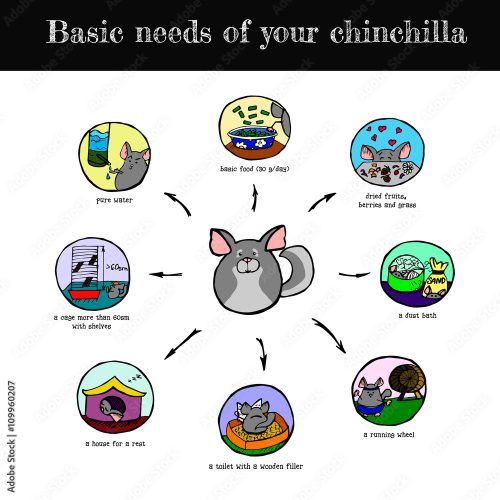
Therefore dust baths should be used as an alternative.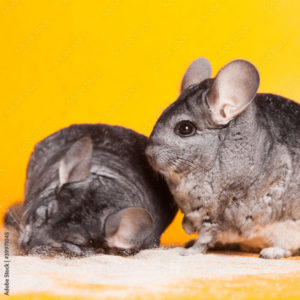
As mentioned before, chinchillas can jump up to 6ft and have bundles of energy. So it is important to house your chinchillas in a cage suitable for their requirements.
The minimum requirements for their cage should be 3ft x 2ft x 2ft but ideally you should be aiming for at least 6ft x 4ft x 3ft.

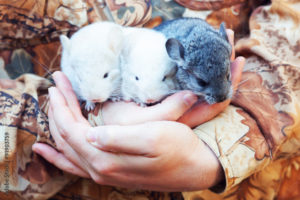
As a general rule, chinchillas should be housed in at least groups of 2 of the same sex.
Of course some chinchillas break this rule and prefer to live alone, but it is better to talk to the breeder or rescue center you are getting your chinchilla from to see what their history is like with others.
Chinchillas can jump over 6ft tall and have bursts of energy available any time they think a predator is nearby.
Therefore it is important that they have access to regular exercise.
Whether that is in the form of an exercise wheel permanently in their cage, or the chance to safely explore their surroundings at least once a day.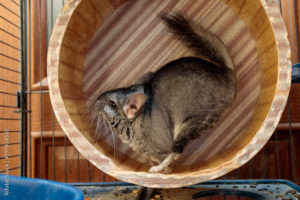
Hay makes up 80% of the chinchilla’s diet and should always be available to your animal.
A pellet designed and sold for chinchillas should be used to make up the 20% of the diet.
This should be weighed out and provided in a non-tippable bowl.
Read the pellet packaging for more information or contact your small mammal vet specialist.

Like all animals, chinchillas do need to release what they’ve consumed!
This usually is in the form of tiny pellet fecal matter and mild yellow urine.
Chinchillas can be toilet trained if done from a young age.
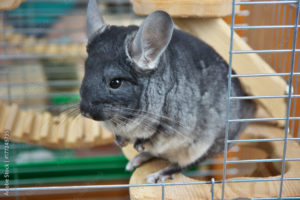
Chinchillas are very prone to diseases such as diabetes which is caused by too much sugar.
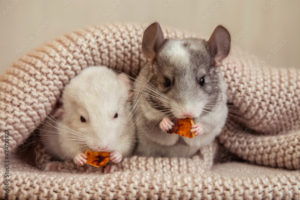
Therefore care should be taken when giving treats to make sure that it is done in moderation and that you take note of how much sugar they contain.
There are plenty of treats on the market that are low in sugar, so as a general rule, anything containing fruit should be avoided as these contain naturally high sugars.
Hay based treats are a good alternative.
Chinchillas need to feel safe before they can fall asleep.
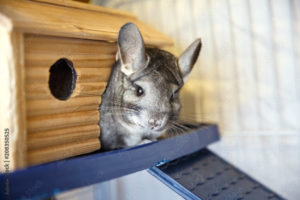
Therefore it is important to provide plenty of hiding places throughout the cage at different levels.
This can be in the form of wooden structures, hammocks etc.
It is best to have some towards the top of the cage and the bottom so your chinchilla can choose and also decide based on their temperature.
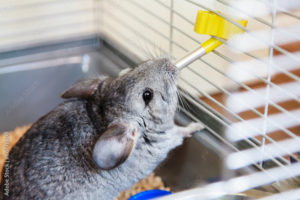
Fresh water should always be available in the form of a small animal water bottle with a ball bearing drip stopper in the nozzle.
This will prevent dehydration and prevent accidents that would more likely happen if a bowl was left in the cage.